Industrial Display Requirements
Industrial environments place demands on display hardware that standard commercial monitors are simply not designed to meet. Continuous operation cycles running 24 hours a day, seven days a week place enormous stress on display components that are only rated for intermittent home or office use. Industrial LCD monitors are engineered with components specifically selected for long-life continuous operation, reducing the risk of premature failure in mission-critical applications.
Temperature is one of the most significant environmental challenges for industrial displays, with many sites experiencing extreme heat near furnaces or process equipment and cold conditions in refrigerated storage or outdoor installations. Standard commercial monitors typically operate within a narrow temperature band of 0 to 40 degrees Celsius, while industrial-grade displays extend that range significantly in both directions. Esis supplies monitors rated for the full temperature range your specific installation will experience across all seasonal and operational conditions.
Dust and particulate contamination pose a constant threat to unprotected display electronics in manufacturing, mining, and agricultural environments. Fine particles that penetrate standard monitor enclosures settle on circuit boards, block ventilation, and cause overheating that shortens component lifespan dramatically. Industrial LCD monitors with sealed front panels and IP-rated enclosures prevent ingress entirely, keeping internal components clean and protected regardless of the ambient dust levels in the surrounding environment.
Vibration from heavy machinery, conveyor systems, and industrial vehicles creates mechanical stress on display mounts, internal connections, and panel components that standard monitors are not designed to absorb. Repeated vibration cycles cause solder joint failures, connector loosening, and display panel delamination in non-industrial hardware over relatively short timeframes. Esis selects monitors with vibration-rated construction for any application where mechanical vibration is a regular feature of the operating environment.
Chemical exposure from cleaning agents, process fluids, lubricants, and airborne vapors can degrade the bezel materials, front glass coatings, and sealing compounds of monitors not specifically designed for industrial use. Chemical resistance of all exposed surfaces must be matched to the specific chemicals present in the operating environment to ensure long-term integrity of the display installation. Esis reviews the chemical exposure profile of each client's environment as a standard part of the monitor selection process.
Brightness and readability under industrial lighting conditions is a display requirement that is often underestimated during the specification process. High-ambient-light environments including facilities with large skylights, outdoor-adjacent workstations, or bright overhead industrial lighting can wash out displays with insufficient brightness ratings. Industrial LCD monitors are available in brightness specifications from standard indoor levels up to sunlight-readable ratings above 1000 nits, ensuring operators can always read their displays clearly. Esis approaches every industrial display requirement by first understanding the full operational environment — assessing temperature ranges, dust and moisture levels, chemical exposure, vibration conditions, and lighting — before recommending any specific product.

Screen Sizes & Resolution
Selecting the right screen size for an industrial LCD monitor starts with understanding how the display will be used, how far away operators will be standing, and how much information needs to be visible at once. A monitor that is too small forces operators to strain to read critical data under pressure, while an oversized display in a compact control cabinet creates mounting challenges and poor viewing ergonomics. Esis helps clients identify the ideal size based on a detailed assessment of each installation environment and operator workflow.
Industrial LCD monitors are available across a broad size range, typically from 7-inch compact panels suited to machine-mounted HMI applications through to 24-inch and larger displays designed for full control room workstations. Smaller displays in the 7 to 12-inch range are ideal for panel door mounting, embedded machine interfaces, and compact operator terminals where physical space is constrained. Larger displays in the 15 to 24-inch range suit central monitoring stations, SCADA operator desks, and control rooms where multiple data streams need to be viewed simultaneously.
Resolution determines the clarity of text, graphics, and interface elements displayed on the screen, directly affecting how easily operators can read and interpret information under real working conditions. Full HD resolution at 1920 by 1080 pixels is the current standard for most industrial display applications, delivering sharp, legible interfaces even on larger screen sizes. For applications involving detailed inspection, high-density SCADA dashboards, or large-format displays, higher resolution panels provide the additional pixel density needed for exceptional clarity.
Aspect ratio selection should account for both the physical mounting environment and the software interface that will be displayed on the monitor. The 16:9 widescreen format is compatible with most modern industrial HMI and SCADA platforms and suits the majority of new installations. Legacy systems designed for older 4:3 display formats may require monitors matched to that ratio to display correctly without scaling distortion, and Esis accounts for this compatibility requirement during the specification process.
Viewing angle performance is critical in control room environments where multiple operators may view a single display from different positions, or where a monitor is mounted at an angle relative to the primary operator position. IPS panel technology delivers wide viewing angles with consistent colour accuracy and contrast across a viewing cone of up to 178 degrees, making it the preferred panel type for multi-operator or angled mounting applications. Esis specifies IPS technology as a standard recommendation for any application where off-axis viewing is a regular occurrence.
Getting screen size and resolution right together is more important than optimising either factor in isolation. A large screen with insufficient resolution produces a display that looks blurry and difficult to read, while a high-resolution screen that is too small for its viewing distance provides no practical benefit over a standard resolution panel. Esis combines both factors into a single integrated recommendation that delivers optimal visual performance for every specific industrial LCD monitor installation.
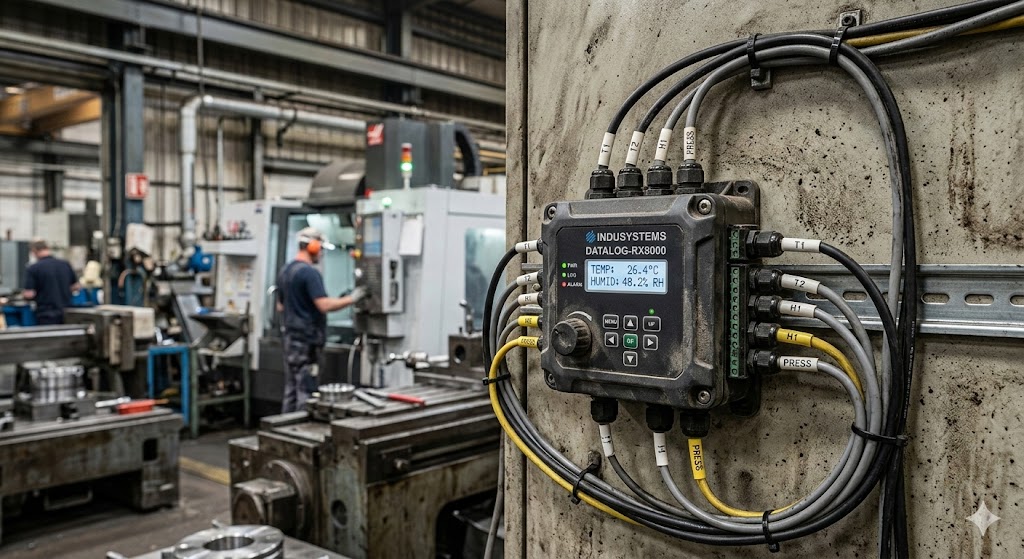
Touchscreen vs Non-Touch Industrial Displays
The choice between touchscreen and non-touch industrial LCD monitors has a significant impact on operator workflow, interface design, hardware complexity, and long-term maintenance requirements. Touchscreen displays simplify the operator environment by eliminating separate keyboard and mouse input devices, reducing the number of components that can fail or become contaminated in a demanding industrial setting. For modern HMI applications where intuitive touch interaction is built into the interface design, touchscreen capability is increasingly the expected standard.
Resistive touchscreen technology remains one of the most widely deployed options across industrial environments because of its broad compatibility with gloved hands, stylus input, and even blunt objects. This makes resistive touch the natural choice for operations where operators routinely wear heavy gloves, where precise stylus navigation is preferred, or where the risk of accidental touch activation needs to be managed carefully. Resistive panels are also inherently resistant to liquid contamination, adding to their suitability in wet or washdown process environments.
Projected capacitive touchscreen technology delivers a more responsive, precise, and durable touch experience than resistive panels and supports multi-touch gestures that are increasingly used in modern industrial software interfaces. Standard capacitive panels require bare skin contact to register input, but industrial-grade capacitive monitors are available with configurable glove sensitivity modes that extend touch response to operators wearing light to medium-weight gloves. Esis recommends capacitive touch technology for applications where interface responsiveness and multi-touch capability are operational priorities.
The mounting position and physical ergonomics of the operator interface play an important role in determining whether touchscreen interaction is practical and comfortable for sustained use. Panel-mounted displays at arm's reach in a vertical orientation are ideal for touch interaction, while displays mounted further away, at awkward heights, or in positions that would require operators to maintain uncomfortable postures to touch the screen are better served by non-touch displays with dedicated input devices. Esis assesses operator positioning as part of every display recommendation to ensure the chosen input method supports comfortable, efficient use.
Touchscreen overlays add complexity to the front panel construction that must be accounted for in IP rating specifications and chemical resistance assessments. The touch surface must maintain sensitivity and accuracy after prolonged exposure to cleaning agents, industrial lubricants, water, and other contaminants without degrading or developing dead zones. Esis selects touchscreen monitors with surface treatments and sealing configurations specifically validated for the chemical and contamination exposure profile of each client's environment.
Non-touch displays remain the right choice for many industrial applications, particularly those where the interface is controlled through dedicated physical input devices such as hardwired control panels, industrial keyboards, or trackball units mounted separately from the display. In safety-critical applications where accidental touch input to an on-screen control could trigger an unintended machine action, removing touch capability entirely eliminates that risk from the system design. Esis evaluates touchscreen versus non-touch requirements as part of a broader assessment that includes operator workflow, interface design, installation environment, and safety requirements.
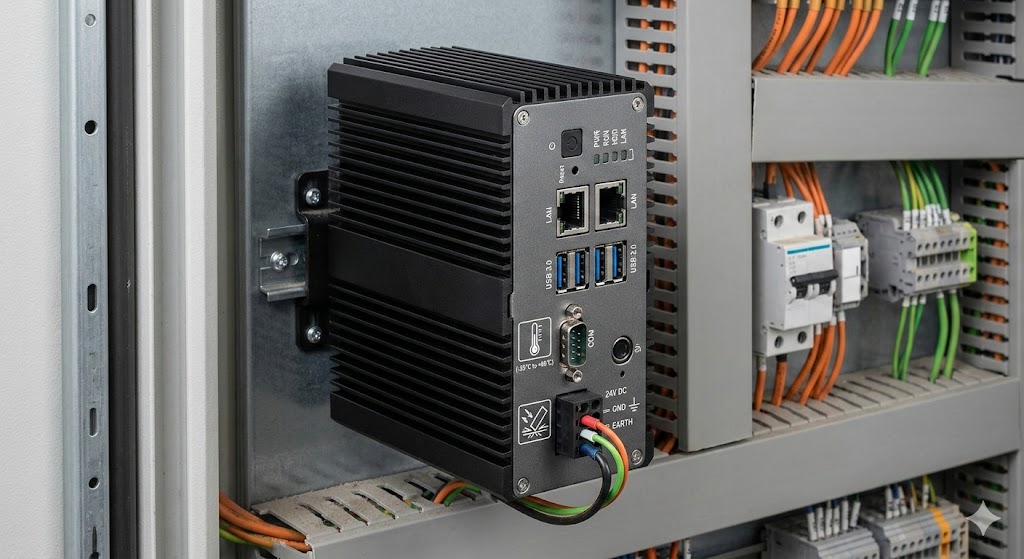
Harsh Environment Protection
Harsh environment protection is the defining characteristic that separates a genuine industrial LCD monitor from a commercial display dressed up with an industrial label. Real industrial protection starts with the enclosure design, where IP-rated sealing prevents the ingress of dust particles and liquids that would otherwise reach the sensitive electronics inside. Esis supplies monitors with verified IP ratings matched to the actual environmental severity of each client's installation site.
The IP65 rating is widely regarded as the entry-level standard for industrial front panel protection, providing complete dust exclusion and resistance to low-pressure water jets from any direction. This level of protection suits the majority of indoor industrial environments including general manufacturing, light assembly, process control rooms, and utility monitoring stations where occasional splashing or cleaning with a low-pressure hose is the most severe liquid exposure the display will face. Esis recommends IP65 as a minimum standard for any monitor deployed outside a protected office or control room environment.
Higher IP ratings including IP66 and IP67 are required for environments where more aggressive liquid exposure is routine. IP66 provides protection against powerful water jets from any direction, making it suitable for food processing, beverage production, dairy operations, and other facilities where high-pressure washdown cleaning is performed regularly. IP67 extends protection to cover temporary submersion, suitable for applications where flooding or immersion events are a realistic possibility during operation or cleaning.
Shock and vibration resistance protect the display from the mechanical stresses generated by nearby heavy machinery, vehicle traffic, structural vibration, and equipment startups. Industrial LCD monitors designed for high-vibration applications use ruggedised panel mounting, reinforced internal component securing, and shock-absorbing construction that prevents the mechanical failures that vibration causes in standard displays over time. Esis assesses vibration exposure levels at each installation site and selects monitors with appropriate shock and vibration ratings for the specific mechanical environment.
EMI and RFI shielding protect industrial monitors from electromagnetic and radio frequency interference generated by variable speed drives, welding equipment, high-voltage switching, and other industrial electrical equipment that can corrupt display signals or damage sensitive electronics. Industrial-grade monitors include shielded enclosures and filtered power supplies that maintain clean, stable operation in electrically noisy environments. This protection layer is often overlooked in display specifications but is critical for reliable performance in electrically intensive industrial settings.
Esis takes a comprehensive approach to harsh environment protection by assessing every relevant environmental factor before recommending a display specification. Rather than defaulting to the most expensive option or the highest available IP rating, Esis matches the protection specification precisely to the actual conditions each monitor will face. This targeted approach ensures clients receive the protection they genuinely need without paying for specifications that exceed their actual environmental requirements.
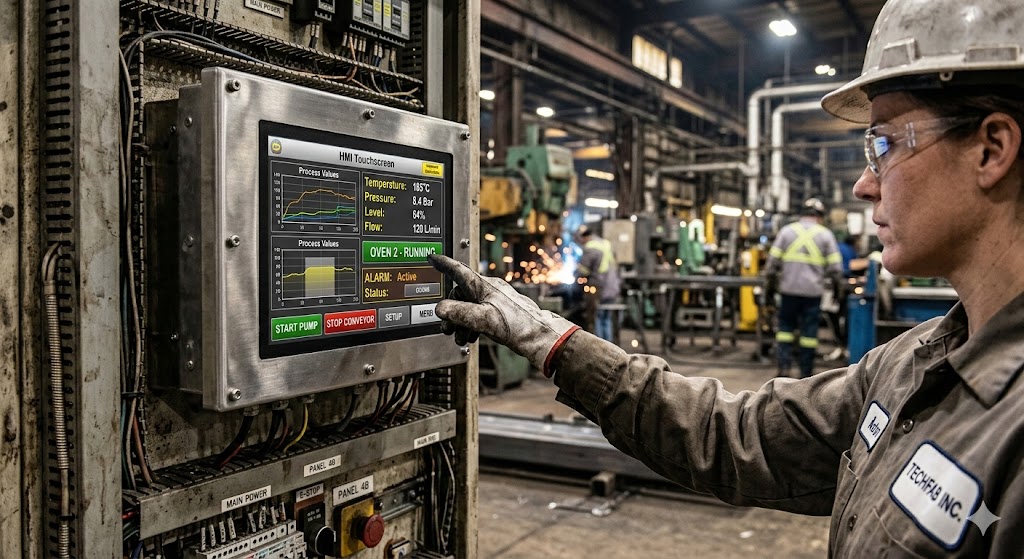
Mounting & Enclosures for Industrial LCD Monitors
Correct mounting and enclosure selection is just as important as the monitor specification itself in determining how well an industrial LCD display performs and how long it lasts in service. A well-specified monitor installed in the wrong enclosure or with an inappropriate mounting arrangement will underperform and fail prematurely regardless of its intrinsic quality. Esis considers mounting and enclosure requirements as an integral part of every industrial display recommendation rather than an afterthought.
Panel mounting is the most common installation method for industrial LCD monitors, where the display is mounted directly into a cutout in a control cabinet door, operator console, or equipment panel with the front face flush or near-flush with the panel surface. This installation method provides excellent protection for the monitor body and associated wiring within the sealed cabinet while presenting only the sealed front panel face to the ambient environment. Esis can specify custom panel cutout dimensions and provide mounting hardware appropriate for the specific panel thickness and material at each installation site.
VESA mounting is a standardised mounting interface that allows industrial monitors to be attached to adjustable arms, swing-out brackets, overhead boom mounts, or fixed wall brackets using a universal bolt pattern. This mounting method provides flexibility to position and angle the display for optimal operator ergonomics, and allows the monitor position to be adjusted or relocated without major installation work. Esis supplies a range of VESA-compatible mounting hardware suited to the full range of industrial LCD monitor sizes and weight classes it supplies.
Rack mounting is the preferred installation method for control room environments where multiple monitors, industrial PCs, and other equipment are housed within standard 19-inch equipment racks. Rack-mounted industrial displays allow a clean, organised control room layout with all equipment accessible from a single location and sharing common power distribution and cable management infrastructure. Esis supplies rack-mount industrial monitor solutions including the appropriate rack adapters and cable management accessories for complete rack integration.
Stainless steel enclosures are the appropriate housing choice for food processing, pharmaceutical, and chemical environments where hygiene standards require surfaces that can be cleaned with strong chemical agents without corroding or harbouring bacteria. Stainless steel enclosures housing standard industrial monitors provide a hygienic, fully sealed external surface while protecting the monitor hardware inside from the harsh cleaning environment. Esis supplies stainless steel enclosure solutions that meet food-grade hygiene standards while accommodating the full range of industrial LCD monitor sizes.
Outdoor enclosures add thermal management, weatherproofing, and sunlight protection to industrial LCD monitor installations in open-air environments including substations, water treatment facilities, outdoor processing areas, and remote monitoring stations. Effective outdoor enclosures incorporate ventilation or active cooling to manage heat buildup from direct solar exposure while maintaining IP protection against rain, dust, and insects. Esis designs outdoor display enclosure solutions that account for the specific climate conditions and solar exposure characteristics of each outdoor installation site.
Cable management within and around industrial monitor mounting installations is a practical consideration that affects both the installation quality and the long-term serviceability of the display. Proper cable entry management maintains the IP integrity of panel-mounted installations, prevents cable strain on rear connectors, and ensures the installation can be serviced cleanly without disturbing other wiring in the vicinity. Esis provides cable management guidance as part of every mounting and enclosure recommendation to ensure installations are completed to a professional standard that supports easy future maintenance.
Custom Monitor Solutions from Esis
Custom industrial LCD monitor solutions are at the heart of what Esis delivers to clients whose operational environments and technical requirements go beyond what standard catalogue products can address. Every industrial site has unique combinations of environmental conditions, mounting constraints, software platforms, and operator requirements that standard off-the-shelf displays may only partially satisfy. Esis builds custom solutions that address every specific requirement precisely, delivering displays that truly fit the application rather than asking the application to fit the display.
The customisation process begins with a detailed consultation where Esis engineers gather comprehensive information about the installation environment, existing control infrastructure, operator workflows, and any specific performance requirements that standard products do not meet. This discovery process ensures that every customisation decision is driven by real operational need rather than unnecessary specification. The outcome is a monitor solution that delivers exactly what is required without overcomplicated or overpriced features that add no genuine value to the application.
Custom bezel and enclosure configurations allow monitors to be adapted to non-standard panel cutout sizes, unusual mounting geometries, or specific aesthetic and branding requirements. Industrial facilities with established panel design standards or corporate branding guidelines often require display hardware that conforms to those standards. Esis works with manufacturers to produce custom bezel configurations that integrate seamlessly into the visual and physical design of each client's equipment and facilities.
Optical bonding customisation enhances display performance in demanding environments by eliminating the air gap between the protective front glass and the LCD panel, preventing internal condensation, reducing reflectivity, and significantly improving contrast and readability in bright conditions. For outdoor displays, high-vibration applications, and environments where condensation is a persistent challenge, optical bonding transforms display performance and durability in ways that cannot be achieved with standard air-gap assembled panels. Esis can specify optical bonding as a custom upgrade for display models where it is not available as a standard factory option.
Custom brightness specifications address the wide range of lighting conditions found across different industrial environments, from dimly lit underground mining operations to bright outdoor installations in direct sunlight. Standard brightness panels suit the majority of indoor industrial applications, but high-brightness panels rated at 800 nits, 1000 nits, or above are necessary for installations where ambient light levels would wash out a standard display. Esis assesses the specific ambient lighting conditions of each installation site and specifies the minimum brightness rating needed for clear, comfortable readability under all operating conditions.
Long-term supply continuity is a critical customisation consideration for clients managing large fleets of identical machines or executing multi-year installation programs that require consistent hardware across every unit. Esis negotiates extended supply agreements with manufacturers on behalf of clients who need guaranteed product availability across long installation programs, protecting against the disruption of mid-project hardware changes. These custom solutions are backed by the same expert installation support, commissioning assistance, and ongoing maintenance services available across the full Esis product range — ensuring that custom does not mean going it alone after delivery.
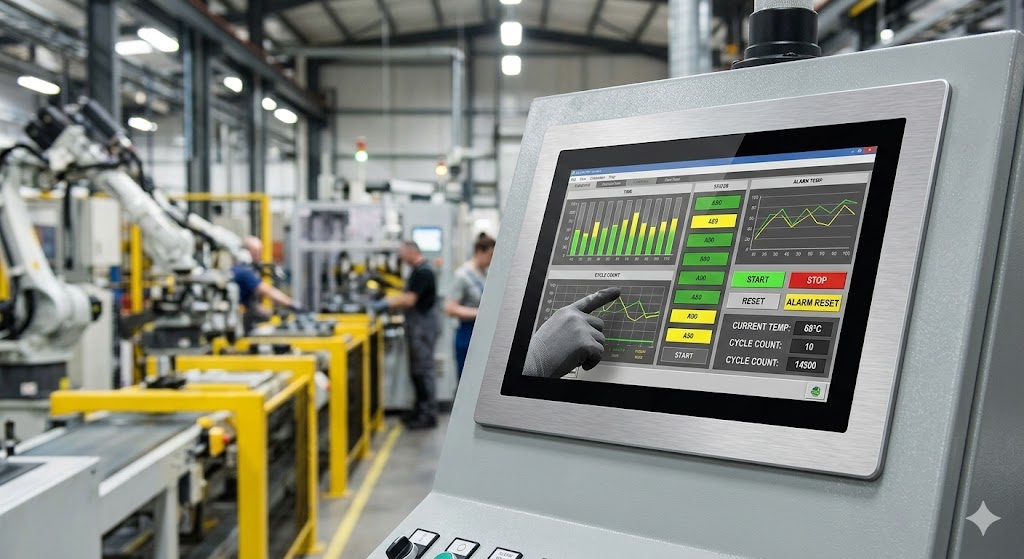
Why Choose Esis for Industrial LCD Monitors in NSW
Esis brings a depth of industrial application knowledge to every display project that sets us apart from general electronics distributors or commercial AV suppliers. Understanding industrial environments, control systems, operator requirements, and harsh environment engineering is not something that can be learned from a product catalogue — it comes from years of hands-on experience across real industrial projects. Every recommendation Esis makes is grounded in that practical, field-tested knowledge rather than theoretical specifications alone.
The Esis product range is carefully curated to include only industrial LCD monitors from manufacturers with proven track records in genuine industrial applications. We do not supply commercial displays relabelled as industrial products or recommend hardware that has not been validated in real industrial environments. Every monitor in the Esis range has been assessed for build quality, longevity, environmental protection, and compatibility with the industrial control platforms our clients use most commonly across NSW.
Local support and fast response times are a genuine competitive advantage Esis offers to industrial clients across NSW who cannot afford to wait weeks for technical assistance or replacement hardware when a display fails in a critical application. Esis maintains local inventory of the most commonly deployed display models and has technical staff available to provide rapid response to urgent support requests. When your operation depends on display reliability, having a local support partner who can respond quickly makes a meaningful difference to your operational risk profile.
End-to-end project capability means Esis can manage every aspect of an industrial display project from initial requirements assessment through product specification, procurement, installation support, and commissioning without requiring clients to coordinate between multiple vendors. This single-point accountability simplifies project management, reduces the risk of compatibility issues between components, and ensures consistent quality across every stage of delivery. Clients who have experienced the complexity of multi-vendor industrial projects consistently tell us that Esis's end-to-end approach saves significant time, cost, and stress.
Technical expertise across the full industrial control ecosystem means Esis understands how industrial LCD monitors interact with PLCs, industrial PCs, SCADA platforms, HMI software, and the full range of control infrastructure found in modern industrial operations. This systems-level understanding allows Esis to identify and resolve potential integration issues before they become installation problems rather than discovering them during commissioning. Our engineers speak the language of industrial control as fluently as they speak the language of display technology.
Choosing Esis for industrial LCD monitors in NSW means choosing a partner who is as invested in the success of your installation as you are. We measure our success not by the number of monitors we ship but by the performance and reliability of every display we supply in the field. Our commitment to long-term client relationships — reflected in the high proportion of Esis clients who return for every new display requirement — means that when your monitors are running perfectly years after installation in the exact conditions they were specified for, that is the outcome Esis has been working toward from day one.